This shirt is a dress shirt from around the first few decades of the 20th century. It is made in superb quality cotton with a fine linen bib and cuffs. It has a beautifully-shaped tab to fix it to the interior of the wearer’s high-waisted pants, to keep the front taught and flat. This is a beautiful shirt - handmade with little hand stitches by a master shirt-maker for someone who was pretty well-off - the quality of the fabric and the making with its reinfoced side gussets plus the little monogramme on the pants tab and the very fine stitched laundrymark on the reverse of that tab tell the story of wealth. There are some small visible repairs on the fine linen bib, some very fine pen-like marks which are almost invisible and I actually think are from laundry blueing mixed with starch, and at the back is a series of curved pinholes which correspond in shape and placement to the sharp buckles found as back adjustments to the high-waisted dress pants of this era (see the final photo).
This shirt was the subject of an ongoing experiment I am conducting on how to add buttons to these types of shirts, which would have originally been worn with shirt studs and cufflinks. Stitching buttons to this fine fabric damages the weave, and also obscures the stunningly skilled handmade button-holes. I never feel right about desecrating someone’s skilled work that I cannot replicate, and so I experimented with making taped studs, using late 19th century deadstock milk-glass buttons with three holes in each button, stitched onto 1920’s woven initial label tape with 1920’s glacé cotton thread. These are the buttons that you see in these pictures - they are to do up the front, the cuffs, and I added a pair to decorate the pants tab just because. The buttons are quite small, if you pull hard they will pop out, but also they are meant to be removed before the shirt is washed.
This shirt is 57cm wide from armpit to armpit lying flat, and measures 41cm from shoulder seam to seam across the back of the neck. The sleeves are 59cm from shoulder seam to the edge of the cuff along the top of the sleeve, and it is 91cm long at the front and 107cm long at the back.
To purchase, please message me via the contact form and include the title of this listing as it doesn’t automatically come across with the message.
This shirt is a dress shirt from around the first few decades of the 20th century. It is made in superb quality cotton with a fine linen bib and cuffs. It has a beautifully-shaped tab to fix it to the interior of the wearer’s high-waisted pants, to keep the front taught and flat. This is a beautiful shirt - handmade with little hand stitches by a master shirt-maker for someone who was pretty well-off - the quality of the fabric and the making with its reinfoced side gussets plus the little monogramme on the pants tab and the very fine stitched laundrymark on the reverse of that tab tell the story of wealth. There are some small visible repairs on the fine linen bib, some very fine pen-like marks which are almost invisible and I actually think are from laundry blueing mixed with starch, and at the back is a series of curved pinholes which correspond in shape and placement to the sharp buckles found as back adjustments to the high-waisted dress pants of this era (see the final photo).
This shirt was the subject of an ongoing experiment I am conducting on how to add buttons to these types of shirts, which would have originally been worn with shirt studs and cufflinks. Stitching buttons to this fine fabric damages the weave, and also obscures the stunningly skilled handmade button-holes. I never feel right about desecrating someone’s skilled work that I cannot replicate, and so I experimented with making taped studs, using late 19th century deadstock milk-glass buttons with three holes in each button, stitched onto 1920’s woven initial label tape with 1920’s glacé cotton thread. These are the buttons that you see in these pictures - they are to do up the front, the cuffs, and I added a pair to decorate the pants tab just because. The buttons are quite small, if you pull hard they will pop out, but also they are meant to be removed before the shirt is washed.
This shirt is 57cm wide from armpit to armpit lying flat, and measures 41cm from shoulder seam to seam across the back of the neck. The sleeves are 59cm from shoulder seam to the edge of the cuff along the top of the sleeve, and it is 91cm long at the front and 107cm long at the back.
To purchase, please message me via the contact form and include the title of this listing as it doesn’t automatically come across with the message.
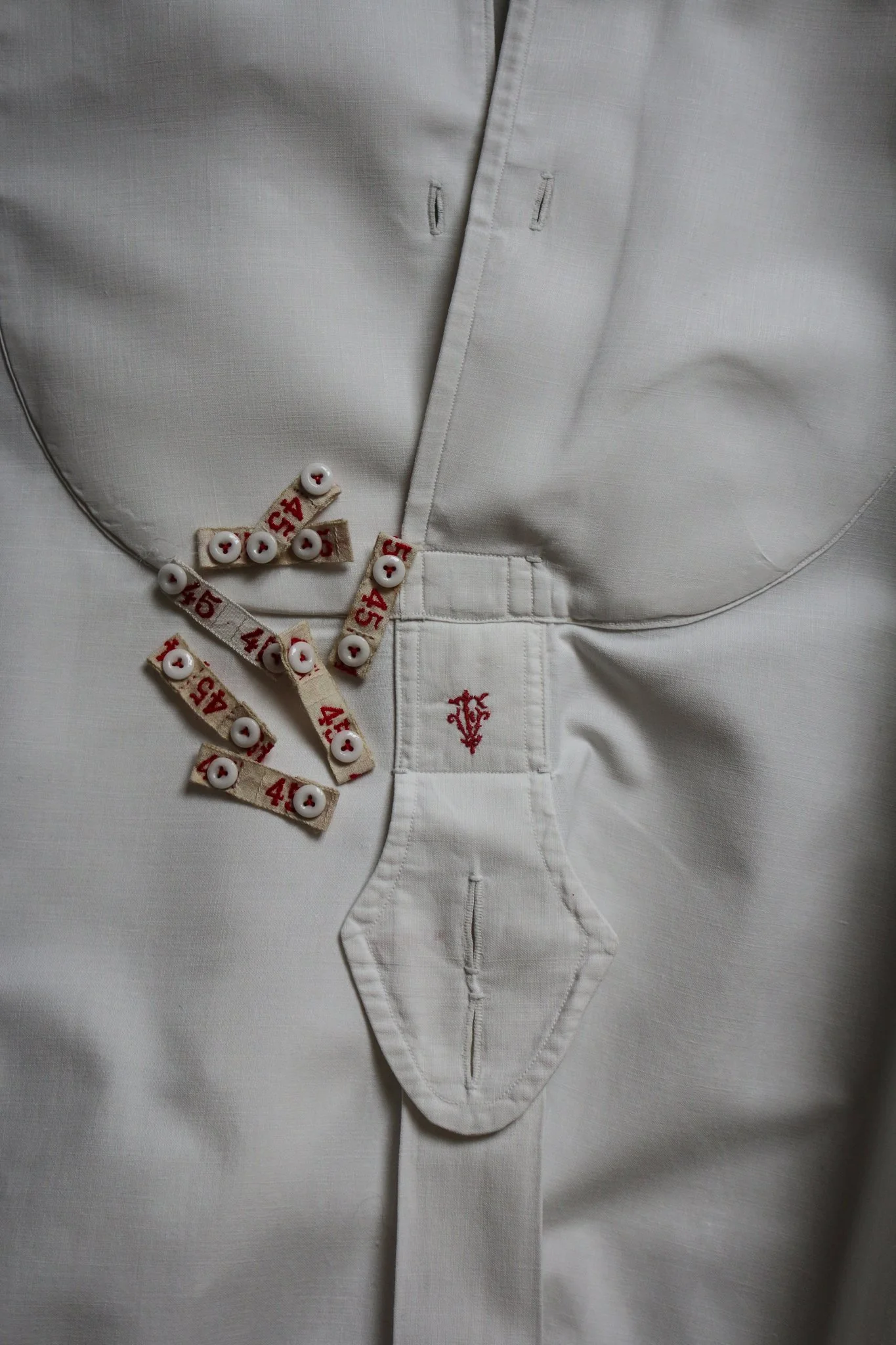 Image 1 of 14
 Image 2 of 14
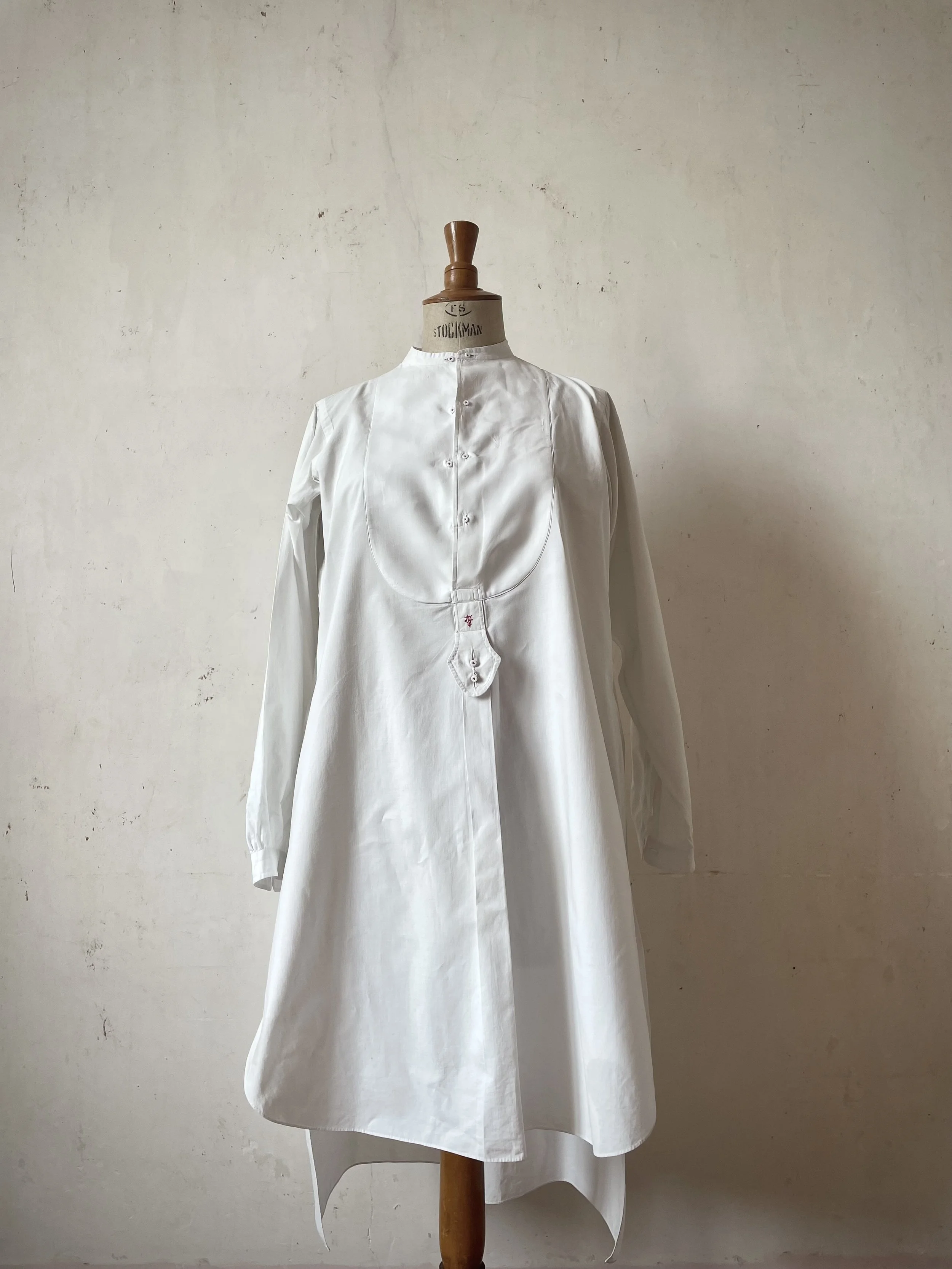 Image 3 of 14
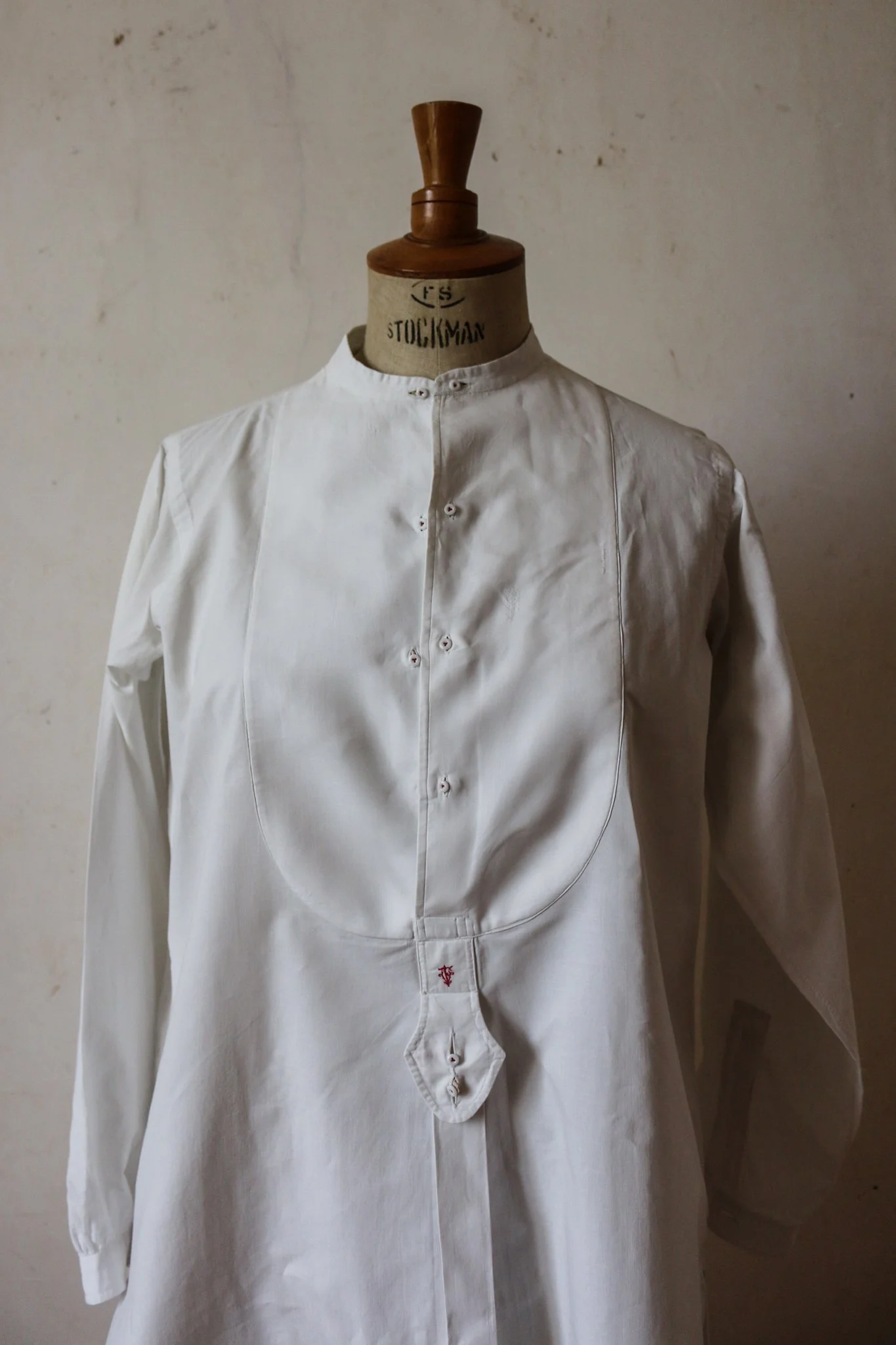 Image 4 of 14
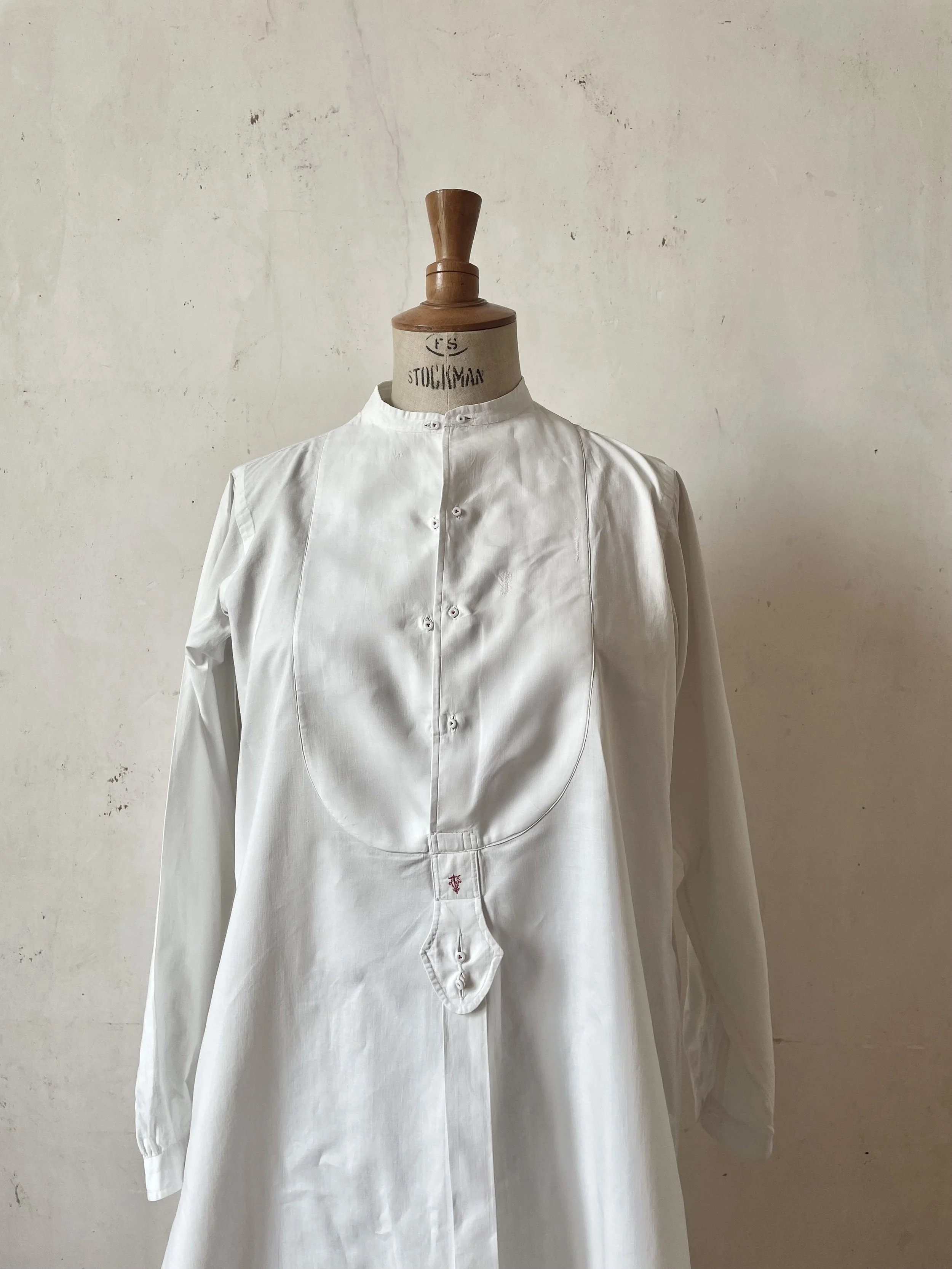 Image 5 of 14
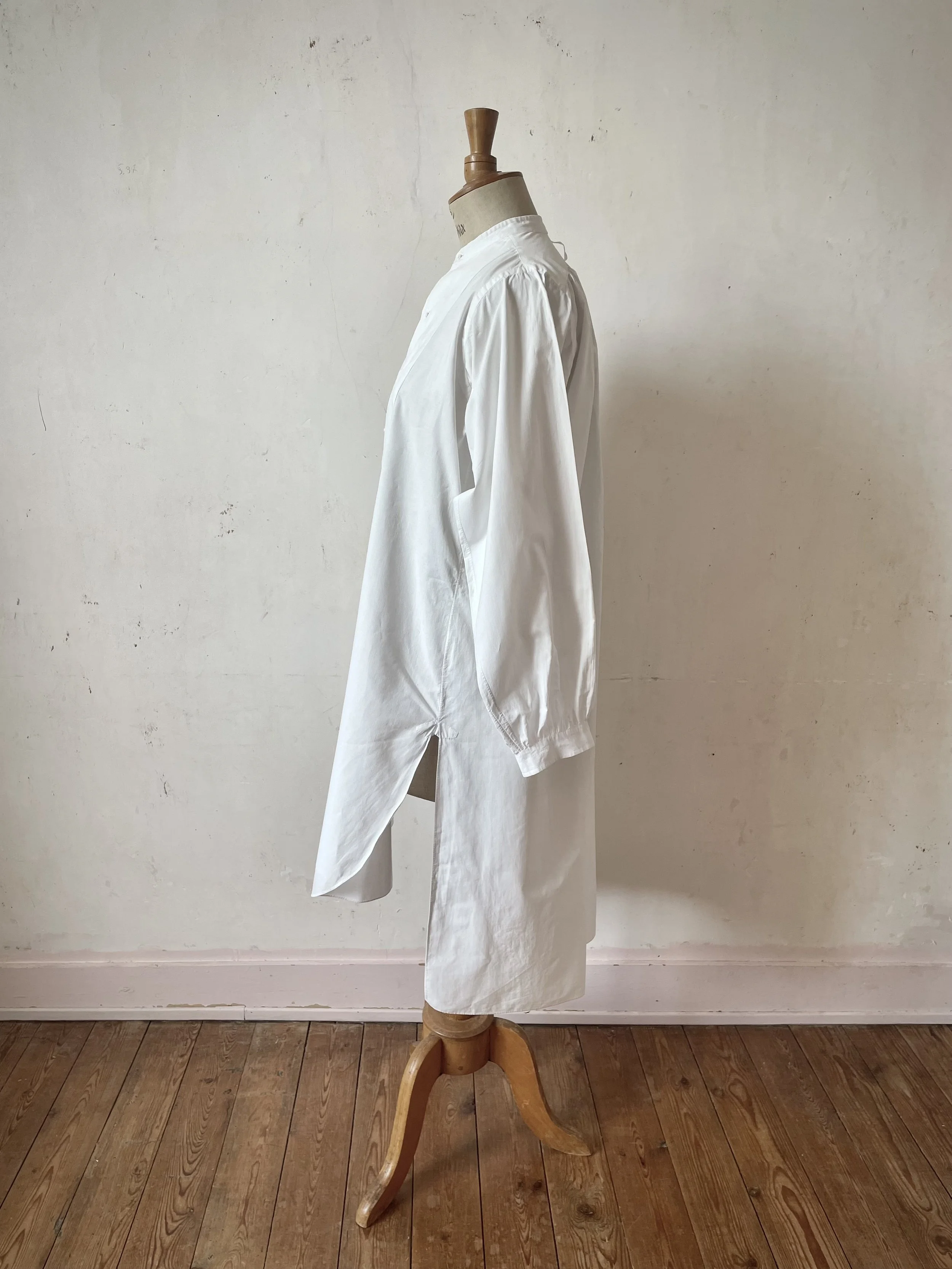 Image 6 of 14
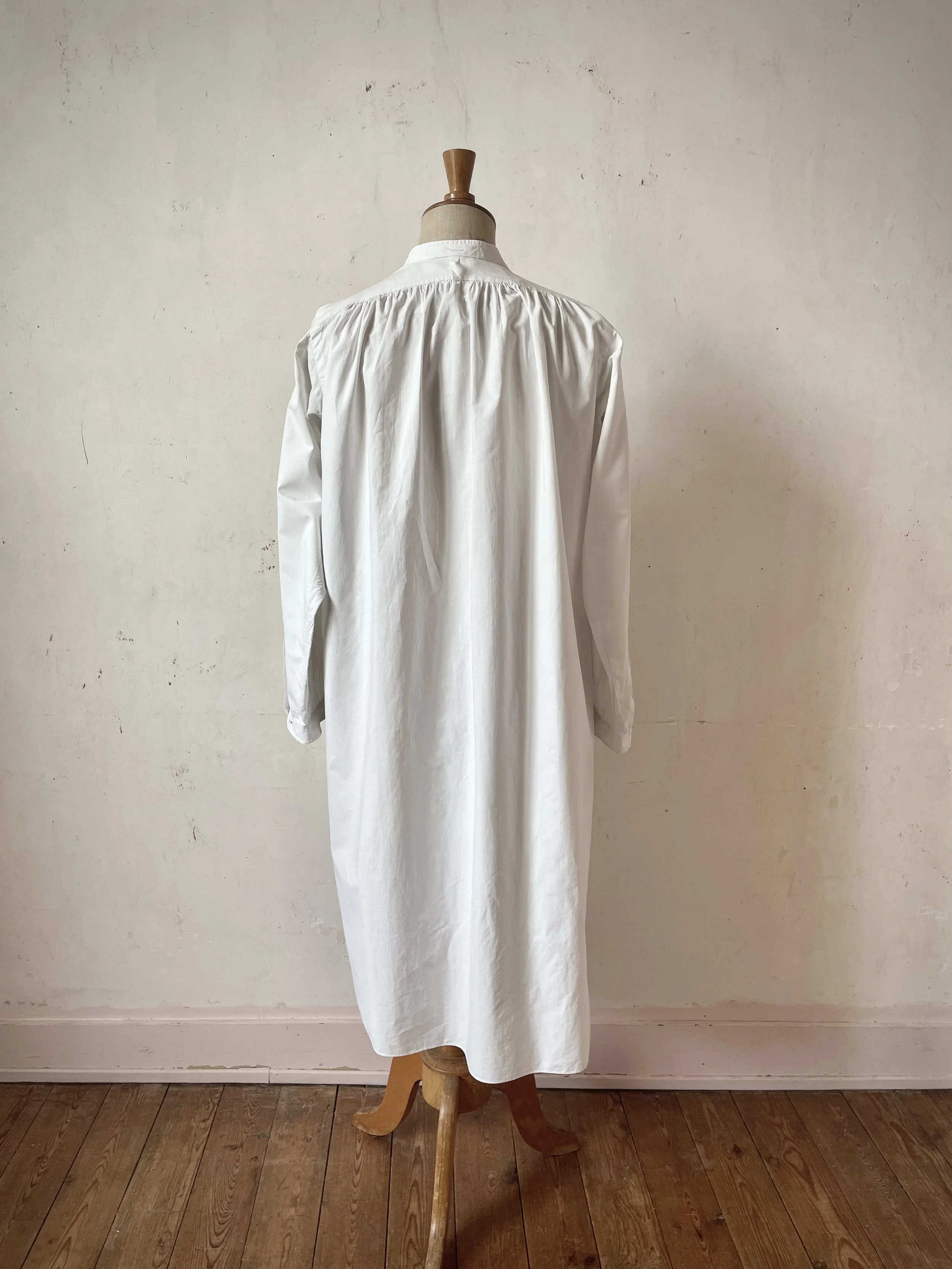 Image 7 of 14
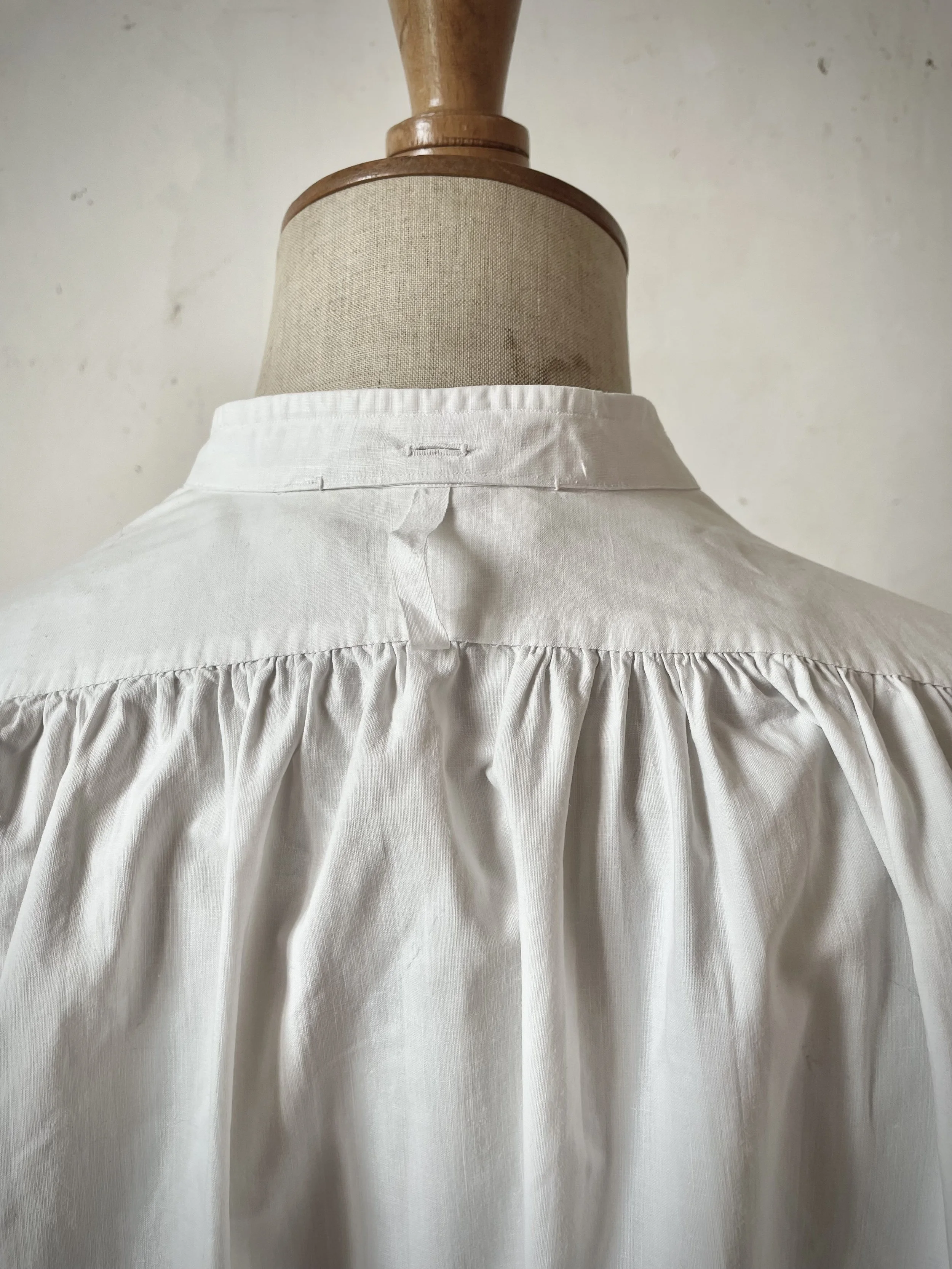 Image 8 of 14
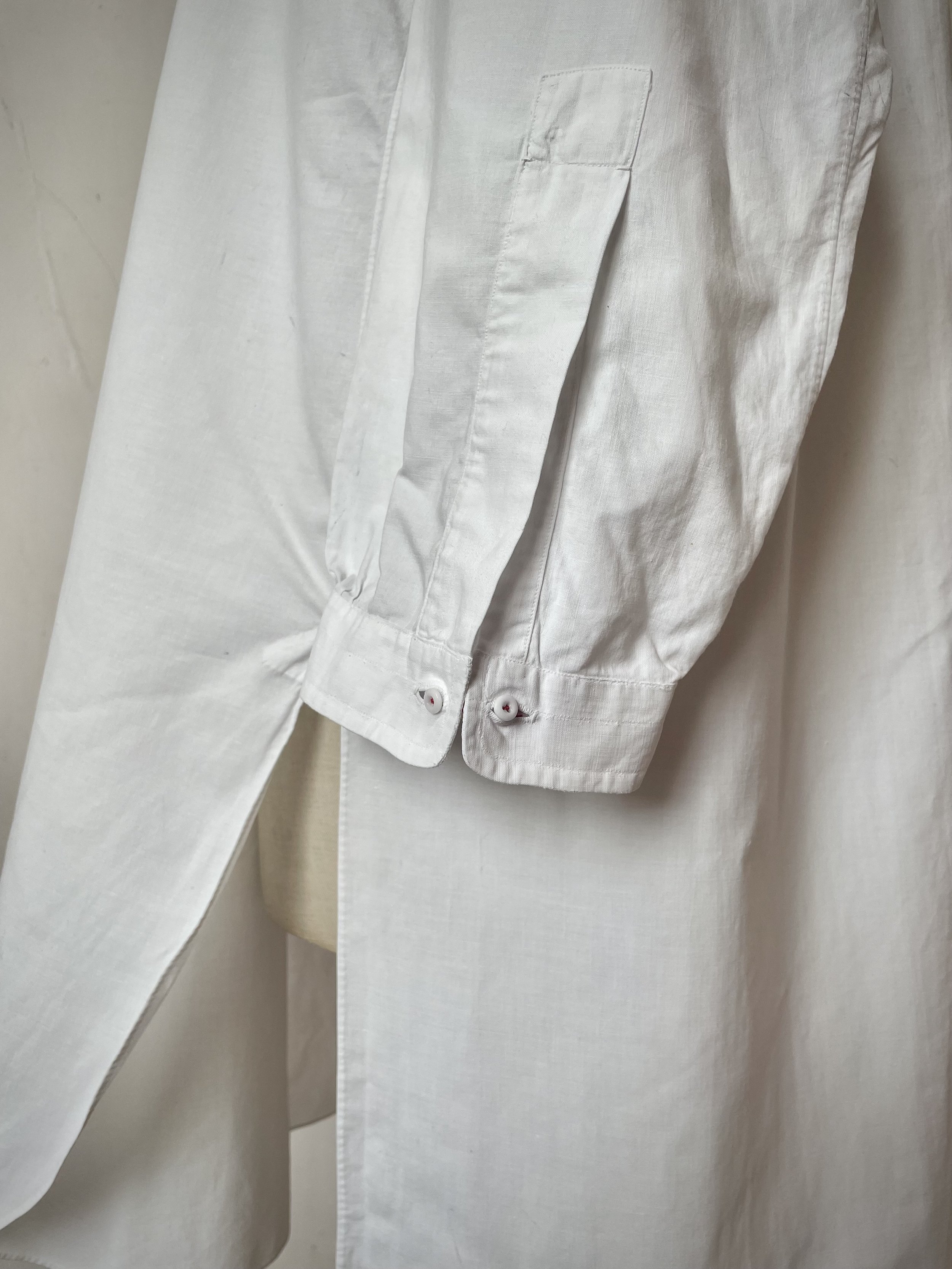 Image 9 of 14
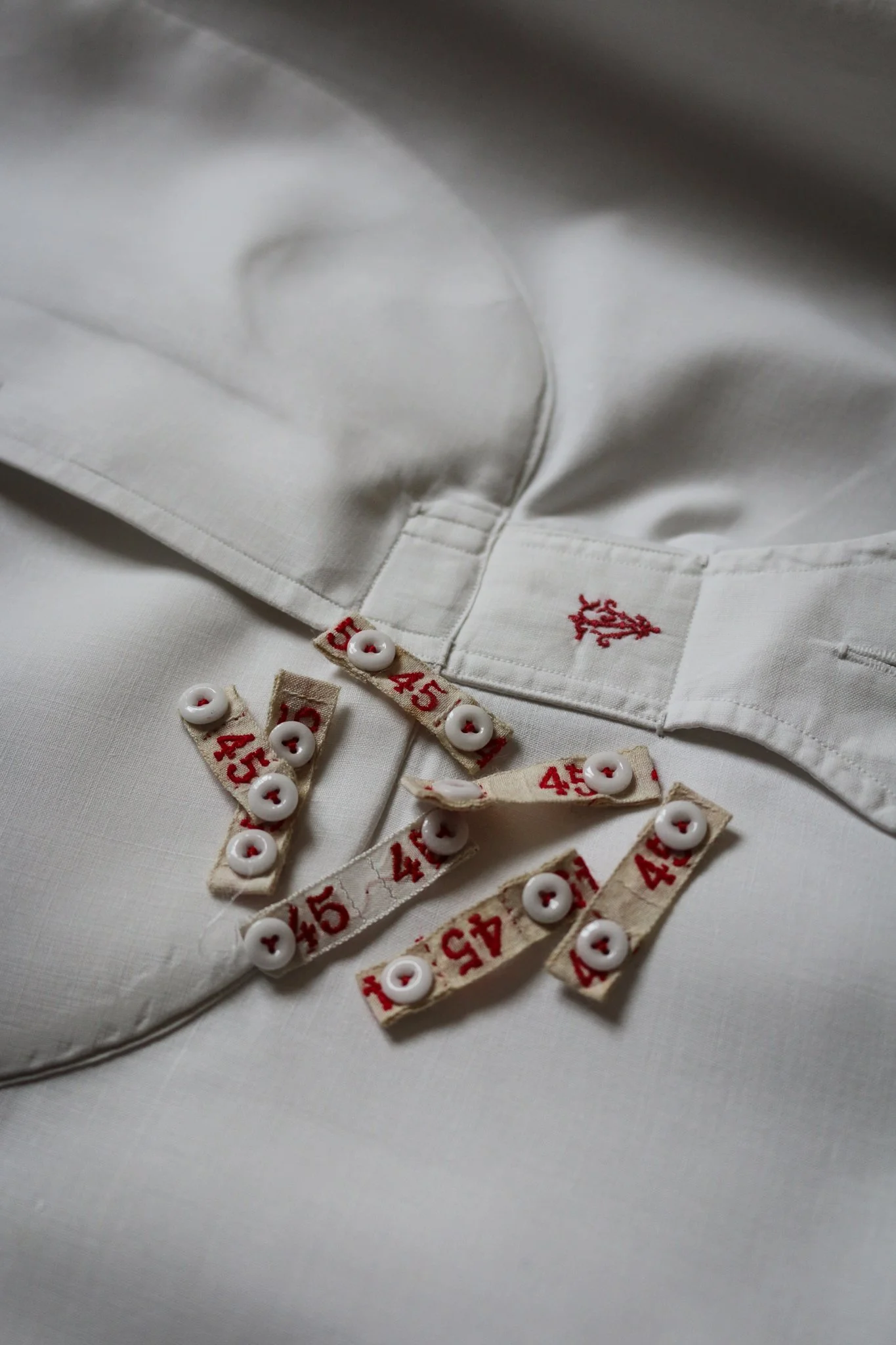 Image 10 of 14
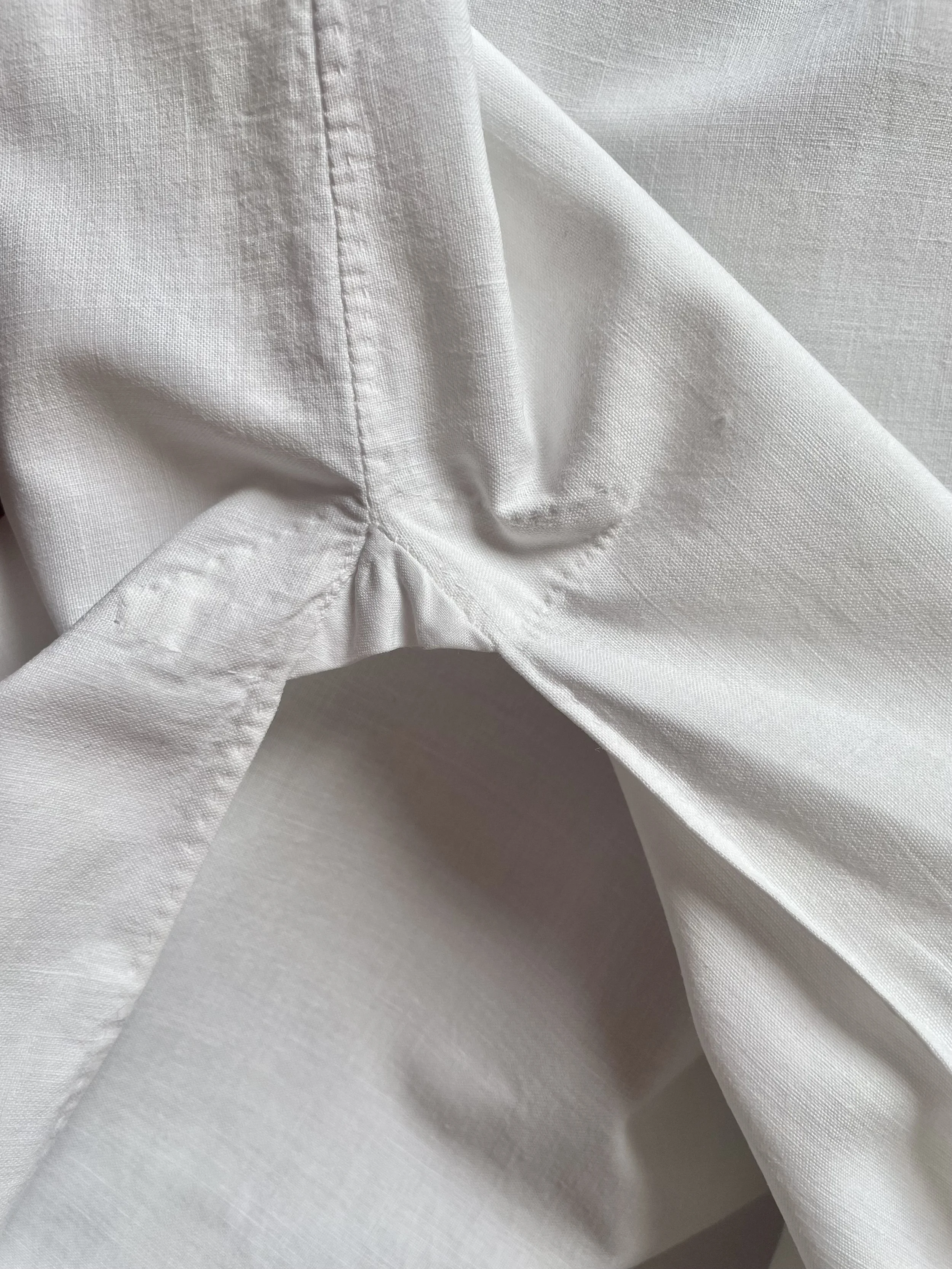 Image 11 of 14
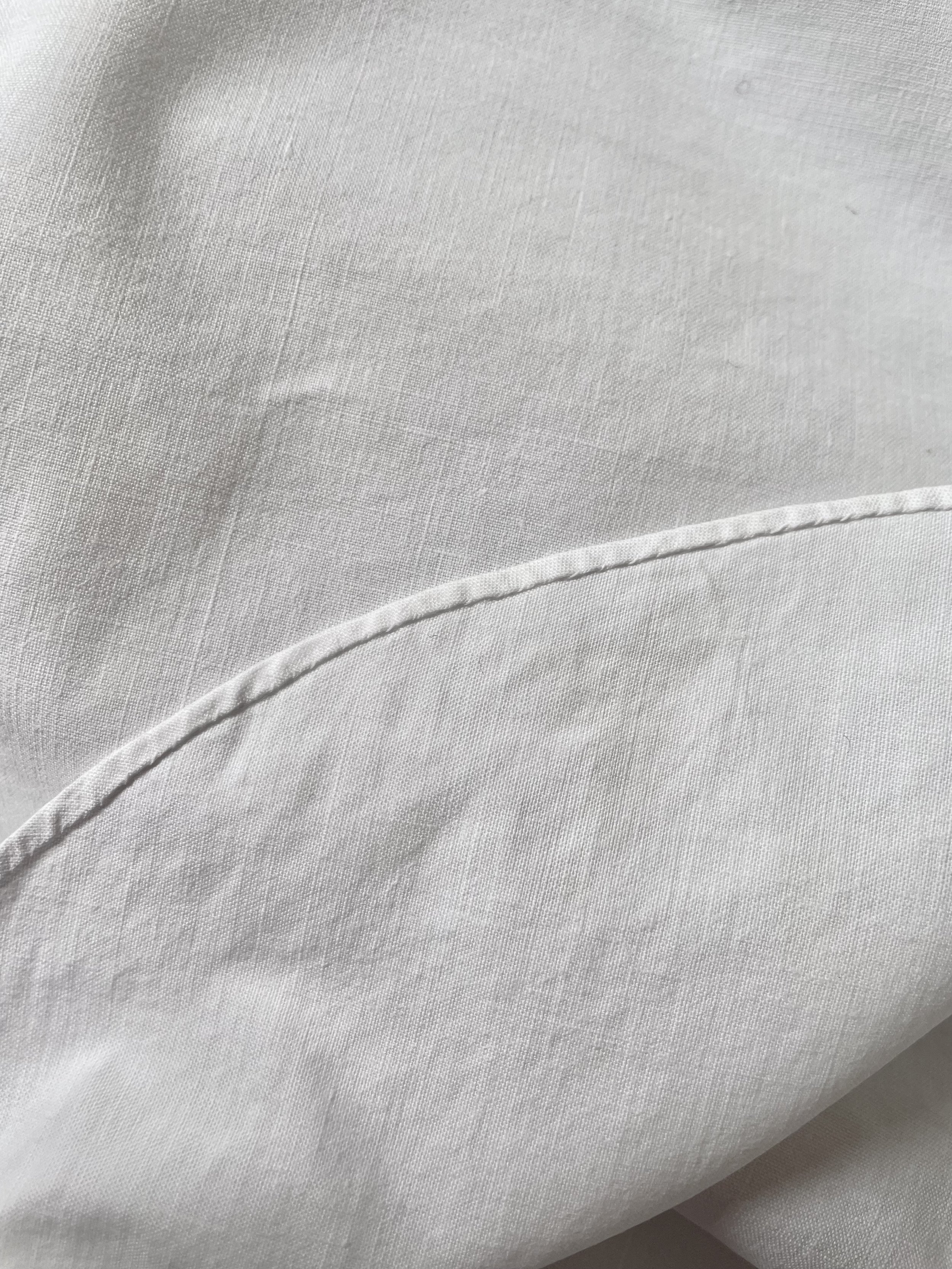 Image 12 of 14
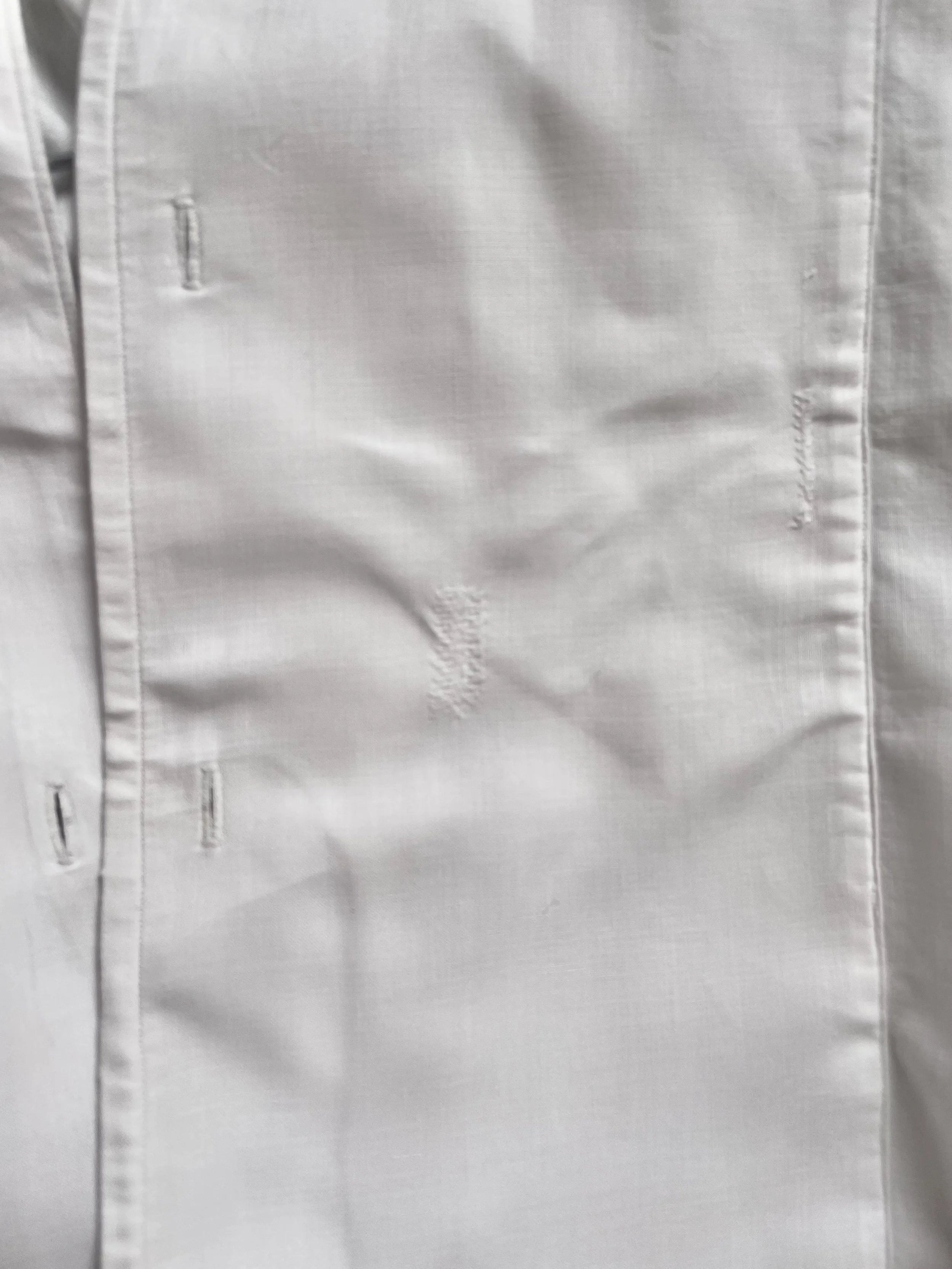 Image 13 of 14
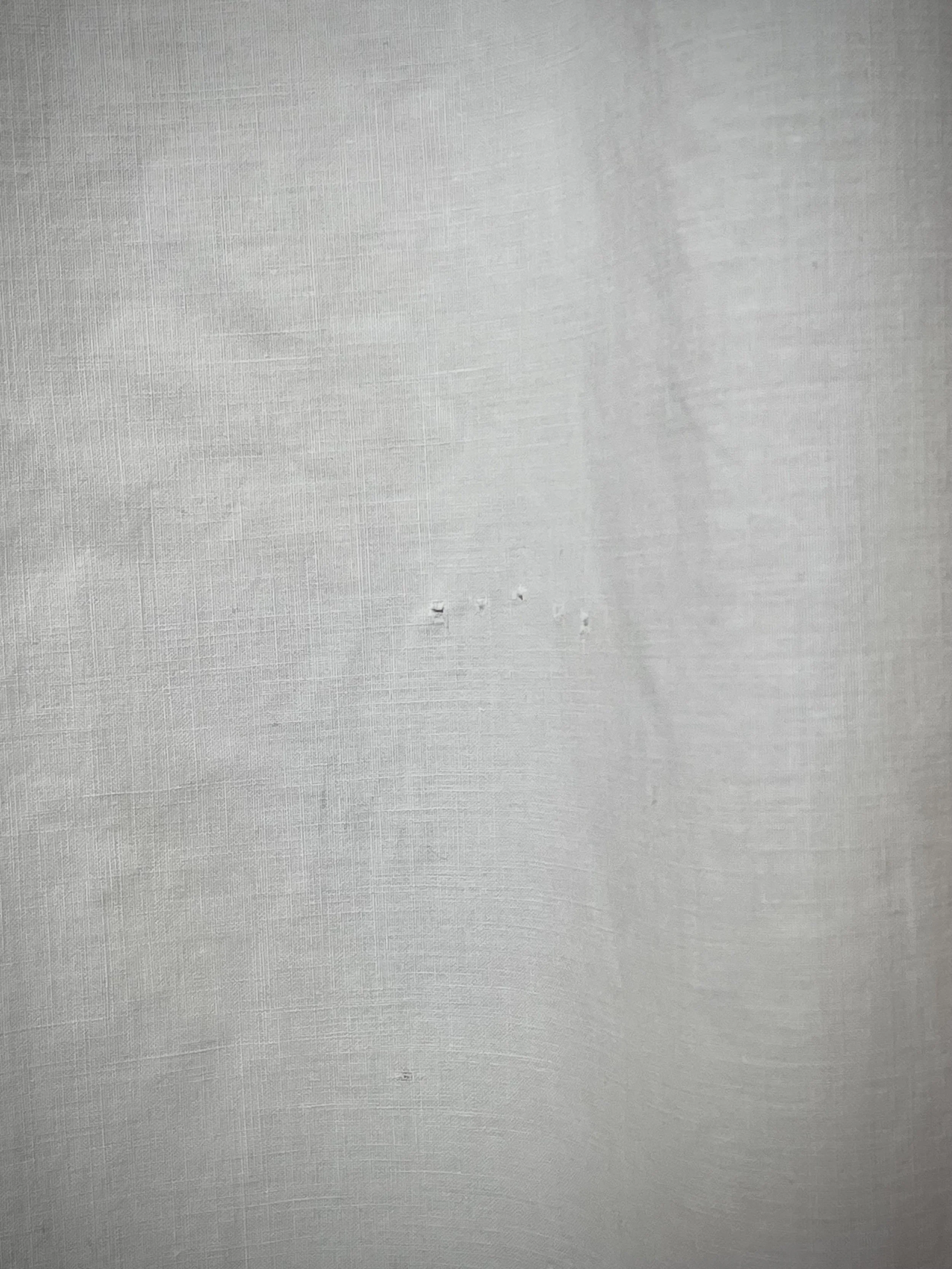 Image 14 of 14